Address
1/21 Penny Pl, Arndell Park NSW 2148, Australia
Work Hours
Monday to Friday: 10AM - 7PM
Weekend: 10AM - 5PM

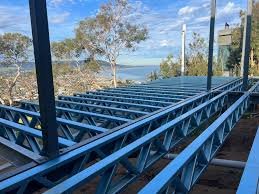
Australia’s residential construction industry is quietly entering a new era.
For decades, builders relied on either traditional timber framing or fully steel-framed homes. But the last two years have sparked a major shift—one that’s rapidly becoming the new industry standard.
Welcome to Hybrid Construction: a smart combination of steel + timber used together to create stronger, more durable, and more cost-efficient homes.
By 2026, this hybrid method is expected to dominate new home builds across Australia—especially in regions facing bushfire risks, coastal weather challenges, and soil movement issues.
Patson Homes has already begun integrating hybrid systems into modern designs, and the results are impressive.
Let’s explore why this method is becoming the next big thing.
Steel and timber each have unique strengths:
Steel provides rigidity, termite resistance, and long-term structural stability.
Timber offers natural flexibility, thermal performance, and easier internal buildability.
Hybrid construction brings the best of both worlds.
The steel frame handles the load-bearing and high-stress points, while timber is used in internal structures, roofing systems, or upper floors to reduce weight and cost.
More stable homes in reactive clay soil
Better performance in windy and coastal zones
Flexibility during minor ground movement
The result? A home that stays strong for decades.
Australia’s changing climate has pushed homeowners to seek safer building options.
Hybrid construction uses steel in the external frame, making the structure naturally more bushfire-resistant, while timber internally helps maintain energy efficiency and acoustic comfort.
Improved fire performance
Less heat transfer
Better insulation values
A more comfortable indoor climate
This is especially valuable for homes in BAL (Bushfire Attack Level) zones.
Steel framing is pre-engineered off-site in precise measurements.
This reduces delays, waste, and errors during construction.
Timber components, meanwhile, are quick to install and easy to modify on-site.
Together, they create a streamlined building process that saves time without compromising quality.
Quicker project handovers
Fewer unexpected delays
Reduced labour cost
Cleaner, more accurate finish
2026 is expected to see a large rise in hybrid modular components as well.
Contrary to popular belief, hybrid homes aren’t expensive.
In fact, they’re more economical than fully steel or fully timber builds in many cases.
Lower foundation load due to lightweight timber components
Less maintenance cost (steel frame = no termites)
Reduced wastage from prefabricated steel
Timber reduces overall material cost
For sloping blocks, hybrid construction is even more efficient — lightweight upper floors mean simpler footings and foundation systems.
Today’s homeowners want homes that look different — clean lines, wider spans, higher ceilings, open-plan living.
Hybrid construction supports modern architecture beautifully.
Large open spaces with steel beams
Warm, natural interior feel with timber finishes
Slimmer structural profiles
Strong roof spans for alfresco and double-height spaces
Patson Homes uses hybrid framing to deliver stylish luxury homes without unnecessary structural cost.
Sustainability is no longer a trend; it’s a requirement.
Hybrid construction reduces environmental load because:
Timber absorbs carbon
Steel is fully recyclable
Prefabricated systems reduce on-site waste
Lighter structures reduce transport emissions
This approach aligns perfectly with Australia’s fast-growing green building standards.
With rising material costs, stricter bushfire regulations, and demand for faster, smarter construction, hybrid systems offer a reliable solution.
More volume builders adopting steel + timber systems
Council-approved hybrid designs becoming mainstream
Increased use of engineered timber and lightweight steel
Lower long-term maintenance cost for homeowners
Patson Homes is already ahead of the curve — adopting hybrid construction to deliver stronger, safer, and future-ready homes.
Hybrid construction isn’t just a trend — it’s a practical shift driven by durability, safety, cost-efficiency, and modern design preferences.
With the combined power of steel’s strength and timber’s versatility, Australian homes are evolving into smarter structures designed to last.
Patson Homes will continue leading this transformation, ensuring every new build in 2026 and beyond is built smarter, stronger, and more sustainably.