Address
1/21 Penny Pl, Arndell Park NSW 2148, Australia
Work Hours
Monday to Friday: 10AM - 7PM
Weekend: 10AM - 5PM

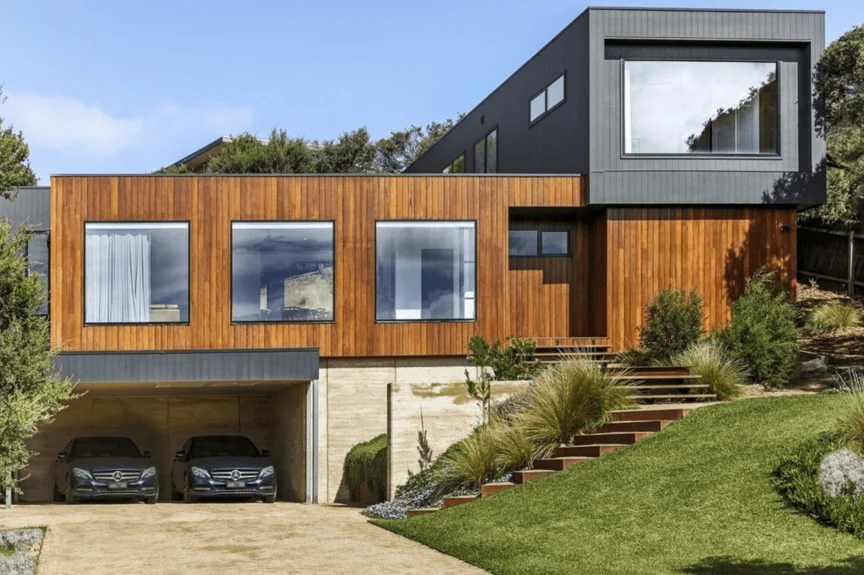
Many Australian suburbs—whether the hills of Melbourne, the elevated pockets of Brisbane, the ridgelines in Perth, or the sloped regions of NSW—are full of sloping blocks.
Building a home on such land can be visually rewarding, but it also comes with challenges and higher costs.
Most builders usually present only two options:
Cut & Fill and Retaining Walls.
But construction methods have evolved. In 2025, design strategies and engineering techniques have become smarter, and homeowners are saving far more than before—often using methods builders don’t openly discuss.
Let’s look at the real cost-saving techniques that can make sloping block homes far more budget-friendly.
For most sloping blocks, a split-level design is the most logical and cost-efficient option.
Minimal heavy excavation
Fewer truckloads of soil removal
Reduced dependence on retaining walls
The structure follows the natural fall of the land
A bonus advantage:
Split-level homes create beautifully layered interiors—your entry, living areas, and bedrooms sit at different heights, giving the home a unique architectural character.
In 2025, this is considered one of the most practical and visually appealing solutions for sloping sites.
Retaining walls are one of the costliest elements of a sloping-site build.
No surprise that many builders recommend them—they offer higher margins.
But 2025 has seen a strong shift toward stepped footings.
Instead of creating a completely flat foundation, the footings are formed in “steps” that follow the slope of the land.
Cuts down retaining wall expenses
Offers a more stable structural base
Reduces site reshaping
Lowers engineering and concrete costs
This is one of the most underrated, cost-efficient techniques for sloping blocks.
On a sloping block, soil removal is often the single biggest cost.
Modern architects and engineers in 2025 are designing with a balanced cut–fill strategy, where:
The same amount of soil that is cut
Gets reused as fill elsewhere on the site
✔️ Zero dumping cost
✔️ Zero transportation cost
✔️ Lower labour cost
This approach alone can save thousands and keep the project budget stable.
If your block has a steep fall (2m or more), creating a flat concrete slab becomes very expensive.
The best alternative is a pier & beam system.
Very limited excavation
Natural drainage remains undisturbed
Better ground ventilation
The home sits elevated above the slope
Far less concrete is needed
This method is rapidly gaining popularity in Australia’s hilly suburbs.
A big trend in 2025 is using lightweight materials for the upper parts of the home, such as:
LVL beams
Engineered timber
Steel frames
SIP panels
Less weight on the foundation → simpler footing design → lower structural cost.
On sloping land, this technique creates a noticeable reduction in overall construction expenses.
Water naturally flows faster on sloping sites.
If the drainage hasn’t been planned from the start, the long-term repair cost can be massive.
Install agricultural pipes early
Do not block natural water flow
Use surface drains designed for your slope
Add proper weep holes behind retaining walls
Good drainage at the start means far fewer problems later.
Flattening a backyard is one of the most expensive parts of sloping-site landscaping.
But the 2025 trend is different:
Work with the natural slope, not against it.
Tiered garden beds
Stone sleeper steps
Native, low-maintenance plants
Small retaining planters
Elevated sitting/view areas
These ideas eliminate the need for heavy retaining walls and save a significant amount of money.
A sloping block can feel overwhelming, but with the right planning and modern 2025 techniques, it can be both budget-friendly and beautifully designed.
Instead of relying on outdated methods like traditional cut–fill and large retaining walls, consider smarter options like split-level designs, stepped footings, pier-and-beam foundations, and efficient drainage systems.
Builders like Patson Homes use these modern strategies to deliver the best value—ensuring your home remains strong, functional, and cost-efficient without compromising quality.